


Machine Vision or Something Simpler? Choosing the Right Inspection Approach
Topics:
November 2026
Machine vision has become one of the most capable technologies available to modern manufacturers. It can inspect products at speed, verify assemblies, read codes, identify defects, measure components, guide robots and support traceability across automated production systems. However, understanding when to use machine vision is just as important as understanding what the technology can do.
A camera based inspection system may be technically capable of solving a problem, but that does not automatically make it the most appropriate engineering solution. In some applications, a conventional sensor, mechanical feature, fixture or relatively simple process change can achieve the same objective with less complexity and lower long-term support requirements.
At SP Automation & Robotics, machine vision is therefore considered as one engineering tool within a much wider automation system rather than the default answer to every inspection or detection challenge. The strongest machine vision applications are those where the technology solves a clearly defined requirement that would otherwise be difficult, unreliable or impractical to achieve.
How Do You Know When to Use Machine Vision?
The decision about when to use machine vision should begin with the manufacturing requirement rather than the camera itself. Before considering hardware, lighting or software, it is important to establish exactly what the automation system needs to determine.
The requirement may be relatively straightforward, such as confirming that a component is present, or considerably more complex, such as identifying product orientation, inspecting a surface, measuring a feature, reading a code, verifying an assembly or guiding a robot towards a randomly positioned component.
The complexity of that requirement matters. If the task simply involves detecting whether an object has reached a fixed position, a conventional industrial sensor may provide a faster, simpler and more cost-effective solution. If the system needs to distinguish between product variants, inspect several features simultaneously or assess information that cannot be reliably detected using a single sensor, machine vision may offer significantly greater value.
This is why SP Automation & Robotics considers machine vision and automated inspection systems as part of the complete automation concept rather than as an isolated technology decision. The objective is not to use the most sophisticated technology available, but to select the most appropriate technology for the production requirement.
When Machine Vision Offers More Than Simple Detection
One of the clearest examples of when to use machine vision is where the system needs to understand more than whether something is simply present or absent.
A photoelectric or proximity sensor may be extremely effective at confirming that a component has reached a particular position. It may not, however, be able to determine whether that component is the correct variant, whether it has been assembled correctly or whether a particular feature is damaged.
Machine vision can evaluate multiple characteristics from the same image. Depending on the application, a single camera may be able to confirm product orientation, identify a component, check the presence of several features and verify that an assembly meets defined criteria.
This becomes particularly valuable where manufacturers require repeatable inspection at production speed or need to assess every product rather than relying on sample-based inspection. SP Automation & Robotics has integrated machine vision into automated systems for applications including inspection, measurement, product identification, robot guidance and process verification, with the technology selected according to the requirement rather than simply because a camera can be added.
For manufacturers looking more broadly at what automated vision can achieve, SP Automation & Robotics has previously explored the benefits of machine vision automation in manufacturing, including its role in quality, traceability and production efficiency.
When a Sensor May Be Better Than Machine Vision
Machine vision is powerful, but capability alone does not make it the best choice for every application. There are many situations where a relatively simple industrial sensor can perform the required task extremely reliably.
If the requirement is to detect whether a product is present at a known position, determine whether a cylinder has reached the end of its stroke or confirm that a component has passed a particular point, a dedicated sensor may provide everything the automation system needs.
Modern industrial sensors can also offer functions including colour detection, contrast measurement and distance sensing. Depending on the requirement, these technologies may provide a simpler alternative to image-based inspection.
The engineering question should therefore be whether the process genuinely requires visual analysis. Using machine vision where a simple sensor would be sufficient can introduce additional cameras, lighting, software, configuration and maintenance requirements without adding meaningful value to the manufacturing process.
At SP Automation & Robotics, signals from sensors, machine vision systems, safety devices and other equipment are coordinated through the machine control architecture. Understanding how PLC I/O communicates with equipment throughout an automated machine illustrates why the simplest reliable signal can often be the most effective.
When assessing when to use machine vision, simplicity should remain part of the engineering decision.
Can Mechanical Design Remove the Need for Machine Vision?
Some inspection and orientation problems originate from the way components are presented to an automation system. A part may arrive in several possible orientations, a component may be difficult to position consistently or an assembly may contain several similar variants. In each case, machine vision could potentially be used to identify what the automation system is seeing.
However, there may also be an opportunity to remove the variation mechanically.
A feeder could present components in a consistent orientation, a fixture could prevent a product from being loaded incorrectly, a locating feature could ensure repeatable positioning, or a physical poka-yoke feature could make incorrect assembly impossible. Where these approaches are practical, they may remove the need for additional vision hardware altogether.
This is closely connected to Design for Automation. Relatively small changes to a component, fixture or handling method can sometimes remove considerable complexity from the eventual automation system.
At SP Automation & Robotics, this is an important part of engineering judgement. A sophisticated vision system may be capable of solving a difficult presentation problem, but if that problem can instead be removed at source, the result may be a simpler, more robust and easier-to-maintain production process.
Why Lighting Is Critical to Machine Vision
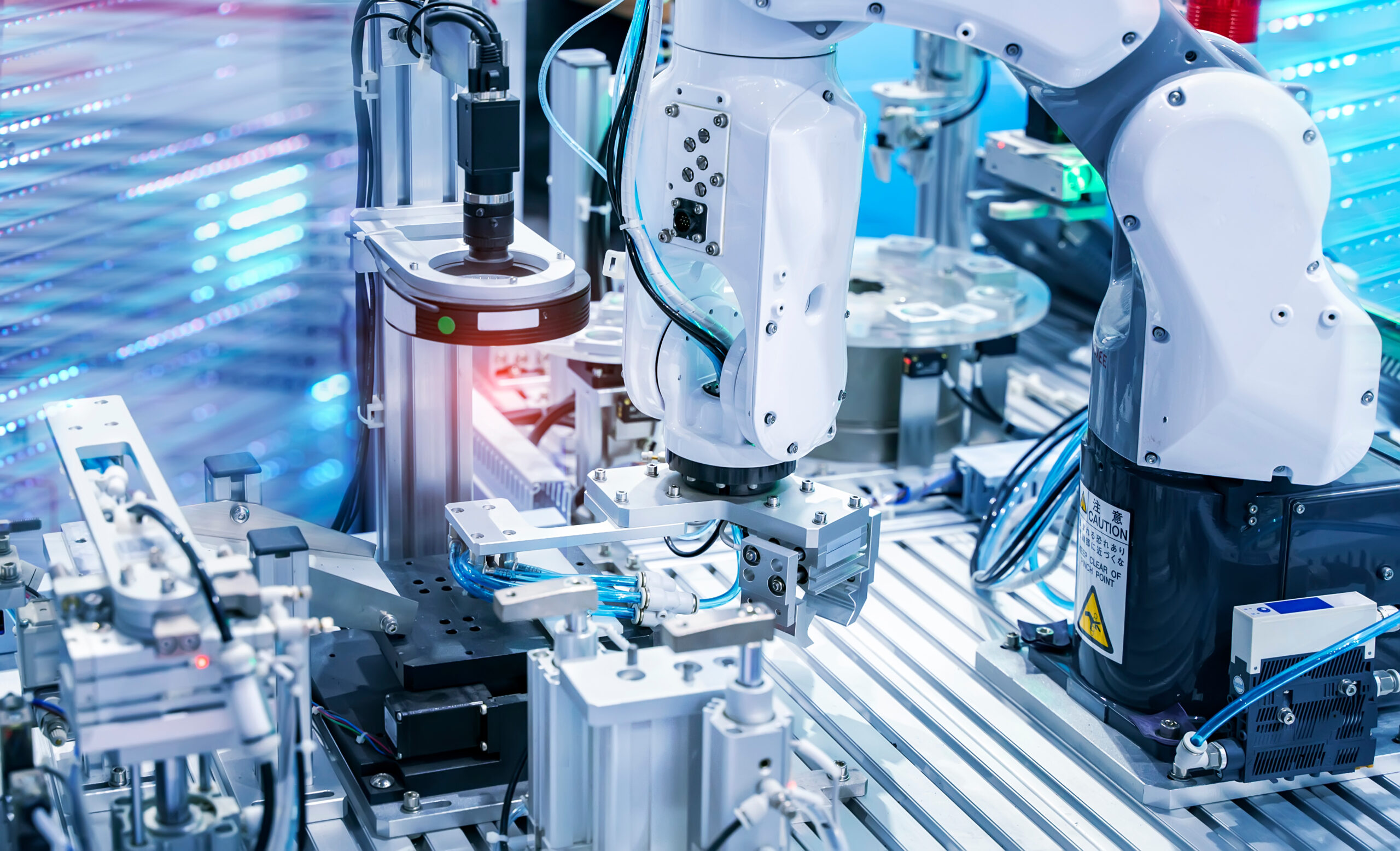
One of the most important factors in any machine vision application is lighting. A camera does not interpret a component in the same way as a human operator, and the inspection system depends on the captured image containing sufficiently clear and repeatable information for the software to identify the features being assessed.
Changes in lighting can significantly affect that image. Reflections, shadows, ambient factory lighting and changes in surface finish can all influence inspection performance, while materials such as polished metal, transparent plastics, glossy packaging and highly reflective components can be particularly challenging.
The camera itself is therefore only one part of a successful machine vision system. Lighting geometry, wavelength, lens selection, exposure, camera position and the physical presentation of the product can all influence the quality and consistency of the image.
SP Automation & Robotics has previously looked at this in more detail when explaining how much it costs to integrate vision systems, because lighting, optics, camera specification and inspection complexity can all influence both performance and project cost.
When SP Automation & Robotics integrates machine vision, these factors are considered as part of the complete engineering solution. The objective is to create controlled and repeatable imaging conditions rather than relying on software to compensate for an inconsistent visual environment.
Reflective and Transparent Components Can Make Vision More Complex
Certain products are naturally more difficult to inspect with machine vision. Highly reflective components can create glare or bright areas that obscure important features, transparent materials may allow objects behind the component to influence the captured image, while curved surfaces can reflect light differently depending on their position and orientation.
These challenges do not necessarily mean machine vision is unsuitable, but they can significantly affect the engineering required to create a reliable inspection. Specialist lighting, optical filters, multiple cameras, alternative viewing angles or different imaging techniques may be required to produce a consistent result.
These are the types of considerations that should ideally be identified during an automation feasibility study rather than after the complete automation system has already been designed.
This is another reason why deciding when to use machine vision requires more than confirming that a camera can see a component. The important question is whether the required feature can be inspected consistently under realistic manufacturing conditions and across the range of variation the system is likely to encounter.
Machine Vision Should Not Hide an Unstable Process
Machine vision can identify variation, but it does not automatically remove the reason that variation exists.
Consider an assembly process where components regularly arrive in different positions because an upstream feeder is inconsistent. A vision system could potentially identify the position of each component and provide coordinates to a robot. Depending on the manufacturing requirement, that may be exactly the right solution.
However, if the variation exists because the feeding process itself is poorly controlled, improving the feeder may result in a simpler and more reliable automation system.
The same principle applies to quality inspection. If a vision system is regularly rejecting products because an upstream process is producing inconsistent results, the long-term answer should not automatically be to introduce increasingly complex inspection logic. Machine vision can identify the symptom, but process engineering still needs to address the underlying cause.
This is closely related to the wider question explored by SP Automation & Robotics in Your Production Problem Might Not Be an Automation Problem. Before introducing additional technology, manufacturers need to understand what is genuinely causing the production issue.
SP Automation & Robotics therefore considers vision within the wider manufacturing process. Understanding when to use machine vision also means recognising when the problem would be better addressed somewhere else.
Using Machine Vision for Quality Inspection
Quality inspection is one of the strongest applications for machine vision. Human inspection can be highly effective where experience and judgement are required, but repetitive visual inspection can create challenges around consistency, fatigue and production speed.
Automated vision systems can assess products repeatedly against defined criteria without the natural variation associated with manual inspection. This becomes particularly valuable where every product needs to be inspected or where the production rate makes manual inspection impractical.
Machine vision can identify missing features, detect incorrect components, verify dimensions, inspect labels, assess assembly conditions and record inspection results. The technology can also support traceability by associating inspection data with individual products, batches or production records.
SP Automation & Robotics has previously examined the types of manufacturing problems vision inspection can solve, including defect detection, measurement, process verification, robotic positioning and product tracking.
Successful inspection, however, still depends on defining exactly what constitutes an acceptable product. If the inspection requirement is subjective or poorly defined, an automated system will struggle to make a reliable decision. The manufacturer and automation integrator therefore need to establish which conditions constitute a pass, which represent a genuine defect and how much normal product variation should be accepted.
Why False Rejects Matter
When manufacturers consider automated vision inspection, much of the discussion naturally focuses on whether the system will detect defective products. This is important, but it is only one part of inspection performance.
A machine vision system that identifies genuine defects but also rejects significant quantities of acceptable production can create its own manufacturing problem. False rejects generate additional scrap, reinspection, operator intervention and lost production, all of which can erode the value of the inspection system.
The inspection parameters therefore need to be robust enough to identify genuine defects without being so sensitive that normal manufacturing variation is classified as failure. This becomes particularly important in high-volume manufacturing, where even a relatively small false-reject rate can translate into a substantial number of products over time.
Quality losses also form part of the wider production picture measured through Overall Equipment Effectiveness, so an inspection system should be assessed according to the usable production it supports rather than simply the number of inspections it performs.
SP Automation & Robotics considers inspection reliability as part of the complete production requirement. A successful vision application needs to perform consistently across the expected range of acceptable and unacceptable products within the real manufacturing environment.
Proof-of-Concept Testing Can Reduce Vision Project Risk
For relatively straightforward inspection applications, establishing machine vision feasibility may be simple. More demanding applications can require considerably more testing, particularly where defects are very small, surfaces are difficult to image, products contain natural variation or inspection needs to take place at high speed.
Proof-of-concept testing allows the engineering team to evaluate cameras, lighting, optics and software using representative product samples before the complete automation system is committed. This can significantly reduce uncertainty and expose technical challenges while there is still time to change the concept.
SP Automation & Robotics uses feasibility and development work to investigate technically sensitive areas early in bespoke automation projects. Machine vision is a particularly good example of where this approach can be valuable because the difference between a reliable and unreliable inspection can depend on relatively small details in component presentation, illumination and image quality.
In more challenging applications, determining when to use machine vision should therefore be based on testing rather than assumption. A controlled trial can establish whether the required inspection is achievable and identify what will be needed to make the system robust enough for production.
Machine Vision Can Provide More Than Pass or Fail
Machine vision can provide useful information beyond a simple pass-or-fail result. A conventional sensor may tell the PLC that an object is present, while a vision system can potentially return information about position, orientation, measurement, classification, product type or quality condition.
That information can then influence the wider automation process. A vision system may identify the orientation of a randomly presented component and provide coordinates to an industrial robot, recognise a product variant and automatically select the corresponding machine recipe, or inspect an assembly and direct rejected products away from the normal production flow.
Inspection data can also support wider process improvement. If a particular defect begins appearing more frequently, that information may help manufacturers identify changes elsewhere in production before the issue becomes more significant.
This ability to generate useful production information is one of the reasons machine vision can provide value beyond inspection itself. However, data should still be collected for a defined purpose. Unnecessary capture, storage and processing can add complexity without improving production performance.
Does Every Robot Need Machine Vision?
Robotics and machine vision are frequently used together because vision can allow a robot to locate components, identify orientation or alter its movement according to what the camera detects. This can create considerable flexibility, particularly where products arrive in variable positions.
However, vision guidance is not automatically required simply because an industrial robot is part of an automation system.
If components are always presented in the same position within a reliable fixture, the robot may be able to perform the required operation using defined coordinates with excellent repeatability. Adding a camera to identify a position that never changes may offer very little additional value.
In contrast, if products arrive randomly on a conveyor, tray or within a bin, machine vision may be essential for establishing where and how the robot should interact with them.
SP Automation & Robotics therefore evaluates the complete handling method before deciding whether vision guidance is justified. The question is not whether a robot is capable of using machine vision, but whether adding machine vision improves the overall manufacturing solution.
When to Use Machine Vision in High-Speed Manufacturing
Production speed can strongly influence the inspection approach. Manual inspection may become impractical when products move through a production process faster than an operator can reliably assess them, and machine vision can perform inspections extremely quickly, making it particularly valuable for high-speed manufacturing.
Higher speeds do, however, introduce additional engineering considerations. The camera must have sufficient opportunity to capture an appropriate image, lighting needs to remain consistent, and products may need to be stabilised or triggered at the correct position.
Image processing and communication also need to happen quickly enough to support the required machine cycle. If a rejected product needs to be removed, the automation system must make the inspection decision and act before that product reaches the reject point.
These elements need to work together as part of the complete automation sequence. SP Automation & Robotics considers cycle time alongside takt time and wider production performance when integrating machine vision into bespoke systems so that the inspection requirement supports rather than restricts the required production output.
Machine Vision Systems Also Need to Be Maintainable
A machine vision system may perform extremely well when it is first installed, but it must also remain reliable in production. Cameras and lighting can be affected by contamination, vibration, accidental movement and changes in the surrounding environment. Lenses may require cleaning, mounting arrangements can be disturbed and tooling or fixtures may wear over time.
Manufacturers therefore need to consider how the vision system will be accessed, maintained and supported throughout the life of the machine. Camera and lighting positions should be practical to reach, settings and software should be properly documented, and replacement hardware should be considered as part of the wider lifecycle of the automation system.
This links directly to SP Automation & Robotics’ approach to designing automation for maintainability, where access, diagnostics, component selection, documentation and long-term supportability are considered during design rather than only after a machine enters production.
A highly capable inspection system that becomes difficult to support can eventually become a source of downtime rather than a tool for preventing it.
Verification Should Continue Beyond the Initial Vision Trial
A successful proof-of-concept demonstrates that an inspection is technically achievable, but the complete machine still needs to prove that the vision system works reliably within the final automation environment.
The camera is ultimately interacting with real products, production tooling, machine movements, control software and reject handling. Testing should therefore assess not only whether the system can identify a defect but whether it can continue to do so repeatedly at the required production rate.
This is one of the reasons Factory Acceptance Testing is important for bespoke automation. Representative products and clearly defined acceptance criteria allow the complete system to be challenged before installation rather than assuming that individual technologies will automatically perform in exactly the same way once integrated.
For vision applications, this may include testing known good and bad components, challenging inspection limits and assessing how the system behaves across the expected range of normal product variation.
Choosing the Right Inspection Approach
Machine vision has transformed what can be inspected and controlled within automated manufacturing, and its flexibility makes it an extremely valuable technology. However, that same flexibility can make it tempting to use vision where a simpler solution may be sufficient.
At SP Automation & Robotics, deciding when to use machine vision begins with understanding the manufacturing requirement. If a sensor can reliably solve the problem, a sensor may be the better engineering choice. If a mechanical feature can prevent incorrect assembly, that may be preferable to inspecting for the mistake afterwards. If component presentation can be improved, that may remove the need for complex vision guidance.
Where the process genuinely requires visual information, however, machine vision can provide capabilities that other technologies cannot easily replicate. It can inspect multiple features, identify complex variation, measure products, guide robots, verify assemblies and generate detailed production information at speed.
SP Automation & Robotics has extensive experience integrating machine vision into bespoke automated systems, but that experience also means recognising when a camera is unnecessary. The aim is not to introduce technology for the sake of it, but to engineer an automation system that works reliably, achieves the required production performance and remains practical to operate and support.
For manufacturers considering automated inspection, robot guidance or product verification, the conversation should therefore begin with the manufacturing process rather than the camera. Understanding exactly what the automation system needs to know is the first step towards selecting the right inspection technology.
Use a polished image of a completed SP Automation & Robotics system that includes machine vision. Ideally the camera should be visible as one integrated element of the wider automation system rather than dominating the image.
Follow us on LinkedIn, Twitter & Facebook to stay updated.
Read more about our automation here…
- The Benefits of Machine Vision Automation in Manufacturing
- The Top 5 Problems Vision Inspection Can Solve
- How Much Does It Cost to Integrate Vision Systems?
- Design for Automation: How Better Product Design Leads to More Successful Automation Projects
- Automation Feasibility Studies: Why High-Value Bespoke Automation Projects Succeed or Fail at This Stage
- Designing Automation for Maintainability: The Decisions That Matter Years Later
- Cycle Time vs Takt Time: What Manufacturers Need to Understand Before Automating
Contact Us
Frequently Asked Questions
When should machine vision be used in automation?
When is a sensor better than machine vision?
What can affect the reliability of a machine vision system?
Can machine vision be used to guide industrial robots?
Does every automated inspection process need machine vision?
More information
Here you can find the most important news, blogs and videos from SP Automation & Robotics.. We will highlight developments, insightful industry trends, company announcements, technology expos, conferences, and events.