


What Is PLC I/O? Understanding the Communication Behind Every Automated Machine
Topics:
August 2026
When people think about industrial automation, they often picture robots, conveyors or sophisticated machine vision systems. However, behind every successful automated process is something much less visible, but just as important: PLC Input/Output (I/O).
Whether a machine is assembling components, inspecting products or packaging finished goods, it can only operate effectively if it knows what is happening around it and can respond accordingly. This communication between the machine and its environment is made possible through PLC I/O.
At SP Automation & Robotics, understanding and testing PLC I/O is fundamental to every automation project we deliver. From bespoke machinery to fully integrated robotic production lines, ensuring every input and output operates exactly as intended is essential for achieving reliable performance, reducing commissioning time and minimising costly downtime.
What Does PLC I/O Mean?
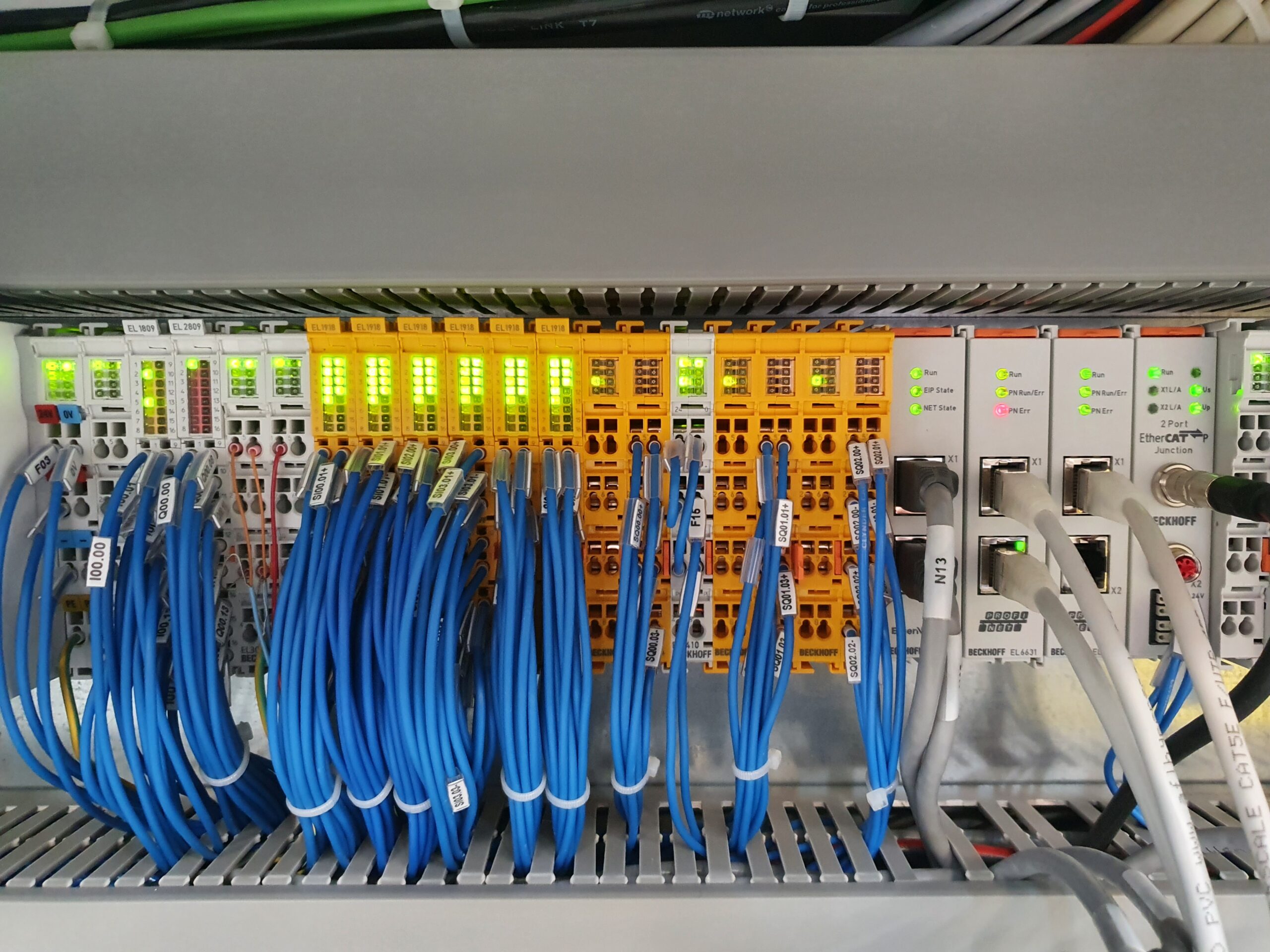
PLC I/O stands for Programmable Logic Controller Input/Output. Put simply, it is the method a PLC uses to communicate with the physical devices connected to a machine.
Inputs provide information to the PLC, allowing it to understand what is happening within the production process. Outputs allow the PLC to respond by controlling equipment throughout the machine.
This continuous exchange of information takes place thousands of times every second. Although operators rarely notice it, every movement on an automated production line depends on these signals being received, processed, and acted upon correctly.
Without reliable I/O, even the most advanced automation system cannot perform safely or consistently.
Although we are looking at the general control system, the very same applies tot he safety side of the control, ensuring that any safety PLC is treated and inspected in the same manor as the general machine PLC.
Bringing PLC I/O to Life
Imagine a conveyor transporting products towards a robotic pick-and-place station.
As each product reaches the correct position, a photoelectric sensor detects its arrival and sends a signal to the PLC. The controller immediately processes this information before instructing the robot to collect the product. Once the robot has completed its task, another signal confirms the cycle has finished, allowing the conveyor to restart and move the next product into position.
This entire sequence happens in a fraction of a second and relies entirely on accurate communication between the PLC and the connected equipment.
At SP Automation & Robotics, we design these interactions so every sensor, actuator, robot and safety device works together as one coordinated system.
Why Reliable PLC I/O Matters
Industrial automation is only as reliable as the information the controller receives. If a sensor fails to detect a component or an output activates the wrong device, production can quickly come to a halt.
Even relatively minor issues such as an incorrectly wired sensor or a misplaced PLC address can lead to commissioning delays, quality problems or unexpected machine downtime.
For manufacturers, these issues often translate directly into lost productivity and increased costs.
This is why SP Automation & Robotics places such importance on verifying every input and output long before equipment is delivered to site. Identifying and resolving issues within our workshop is significantly faster, safer and more cost-effective than troubleshooting them on a live production line.
More Than Simple On and Off Signals
Although many people think of PLC I/O as simple on and off signals, modern automation systems are often far more sophisticated.
Today’s manufacturing environments frequently rely on analogue signals that continuously monitor values such as pressure, temperature, flow rates and position. These measurements allow PLC software to make precise adjustments in real time, improving product quality, process stability and overall manufacturing efficiency.
Whether controlling a collaborative robot, regulating a servo-driven assembly process or integrating machine vision technology, SP Automation & Robotics develops PLC systems capable of managing both digital and analogue I/O seamlessly within a single automation solution.
When is I/O testing carried out?
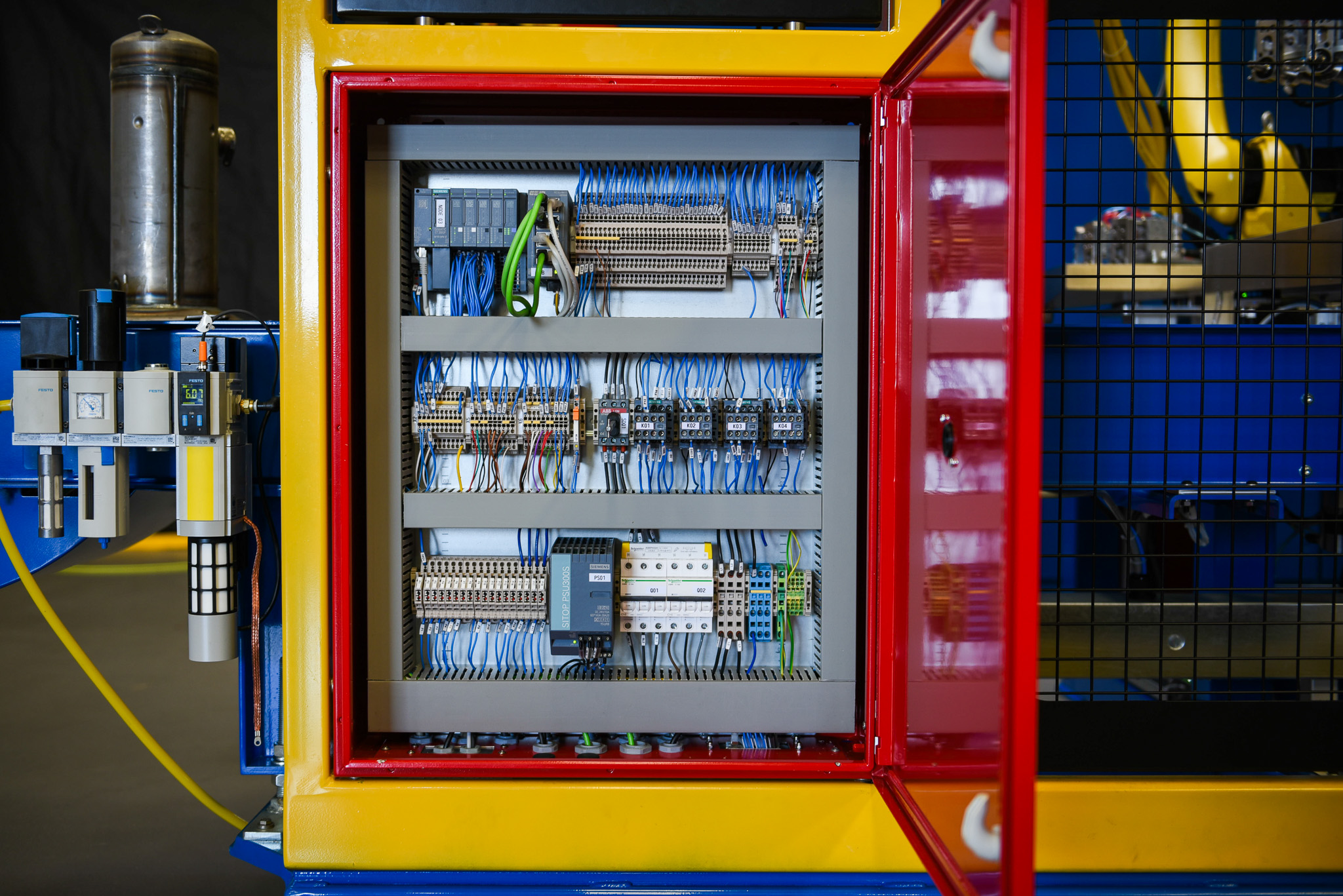
At SP, I/O testing happens when the machine is at an advanced build stage. Each station or process is checked using an I/O checklist and is carried out by a mechanical and electrical engineer to ensure that all sensors and devices are operating correctly. This requires manually energising valves, checking sensors, vision systems, and anything else that provides or requires a signal from a control system.
Input Device examples include pressure switches, limit switches, encoders, emergency stops, etc.
Output Device examples include electric motors, fans, solenoid valves, contactors, relays, pneumatic valves, and heaters.
To summarise the above examples, the PLC could receive an input from a sensor saying “box detected.” The PLC then sends an output to a motor starter or drive, causing the conveyor motor to run.
By thoroughly testing every PLC input and output before installation, SP Automation & Robotics helps customers avoid unnecessary delays, reduce on-site troubleshooting and achieve faster production start-up.
It also provides confidence that safety systems, control software, sensors and mechanical equipment are all working together exactly as intended before the machine enters adebug stage and live manufacturing environment.
Partner with SP Automation & Robotics
Reliable PLC I/O is the foundation of every successful automation system. Whether developing bespoke special purpose machinery, integrating robotic systems or delivering complete production line automation, SP Automation & Robotics ensures every signal, every device and every control function is thoroughly tested before installation.
Combined with comprehensive Factory Acceptance Testing, professional commissioning and ongoing technical support, our approach helps manufacturers improve reliability, reduce downtime and maximise the long-term value of their automation investment.
If you’re planning a new automation project or upgrading an existing production line, our experienced engineers can help design, build and test a solution that performs reliably from day one.
Follow us on LinkedIn, Twitter & Facebook to stay updated.
Read more about our automation here…
- Benefits of Automation
- The Benefits of Machine Vision Technology
- How Much Does it Cost to Design a Special Purpose Machine
- Designing Automation Systems for Pharma
- Robots & Cobots – What is the Difference?
- Robotic Automation
- What is a URS? Why is it Important?
- Cost of Industrial Automation
Contact Us
Frequently Asked Questions
How long does it take to design a special purpose machine?
What is included in the design phase of a bespoke automation machine?
Why does designing a special purpose machine take time?
Can the design phase be shortened?
What factors influence design time?
More information
Here you can find the most important news, blogs and videos from SP Automation & Robotics.. We will highlight developments, insightful industry trends, company announcements, technology expos, conferences, and events.