


Design for Automation (DfA): How Better Product Design Leads to More Successful Automation Projects
Topics:
July 2026
When designing a product, one of the most important questions designers should ask is: How will these parts be made, and ultimately, if the longer-term goal is automation, how will these parts be assembled and tested?
The most successful automation projects begin long before a machine is ever designed. They begin during product development, where seemingly small engineering decisions can have a significant impact on manufacturing efficiency, automation complexity and long-term production costs.
At SP Automation & Robotics, we’ve spent more than 40 years designing and manufacturing bespoke automation systems across a wide range of industries. One lesson has remained consistent throughout that time: products designed with automation in mind are almost always easier to manufacture, easier to scale, and more cost-effective to automate.
Design for Automation (DfA) is about making those decisions at the earliest possible stage, ensuring products are engineered not only to perform their intended function, but also to move efficiently through an automated manufacturing process.
What Is Design for Automation?
Design for Automation, commonly referred to as DfA, is an engineering approach that considers automated manufacturing during product development rather than after it.
Instead of designing a product first and asking automation equipment to overcome unnecessary manufacturing challenges later, DfA encourages engineers to think about how components will be handled, assembled, inspected and tested from the outset.
This doesn’t mean compromising product performance or limiting innovation. Quite the opposite. It means creating products that achieve their design objectives while also being practical to manufacture using reliable, repeatable automated processes.
When automation engineers become involved early, they can identify opportunities that are often difficult or expensive to address later in the project. Small design improvements may eliminate unnecessary handling operations, reduce tooling complexity or simplify robotic movements before machine design has even begun.
The result is an automation solution that is typically simpler, more reliable and easier to maintain throughout its operational life.

Why Product Design Has Such a Big Impact on Automation
Many manufacturers naturally focus on creating products that meet customer requirements, achieve the desired performance and reach the market as quickly as possible.
However, the choices made during product development often determine how straightforward or challenging the manufacturing process will become.
Features that appear insignificant during design can introduce considerable complexity during automated production.
For example, a component that can only be picked from one precise orientation may require additional feeding equipment, robotic movements or vision systems. Multiple fastener types can increase assembly complexity, while poorly defined locating features may require more sophisticated tooling to achieve consistent positioning.
Individually, these issues may seem relatively minor.
Collectively, they can increase project costs, extend development times and reduce production efficiency for years to come.
By considering automation requirements early, many of these challenges can be eliminated before they ever become problems.
The Commercial Benefits of Design for Automation
Design for Automation is often viewed purely as an engineering discipline, but its commercial benefits can be just as significant.
Simpler automation systems generally require fewer mechanical components, less complex tooling and fewer specialised handling devices. This can reduce capital investment while also improving long-term reliability and lowering maintenance requirements.
Cycle times can often be reduced because robots perform fewer movements, components require less manipulation and assembly sequences become more straightforward.
Commissioning can also become faster because there are fewer variables to optimise before production begins.
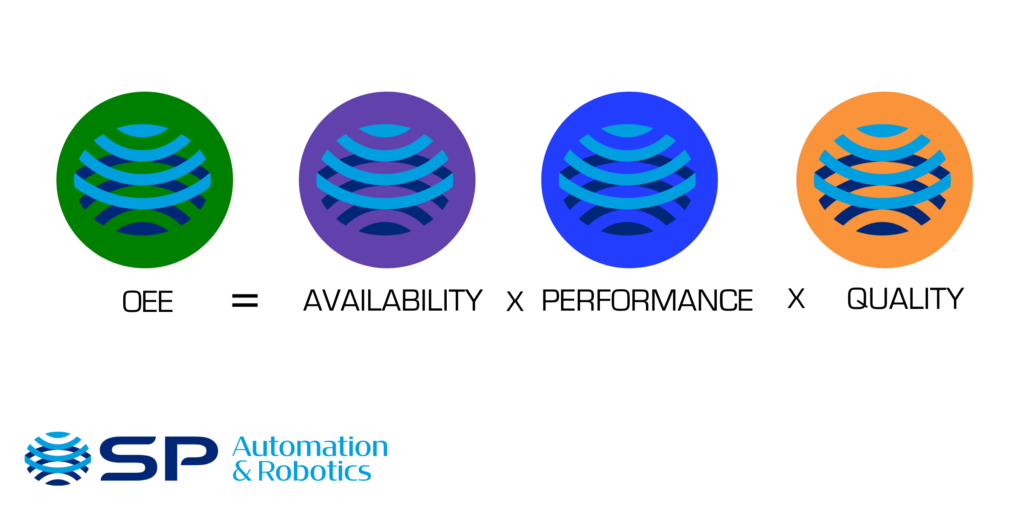
Over the lifetime of a manufacturing system, these improvements can contribute to lower operating costs, greater production stability and higher overall equipment effectiveness (OEE).
Perhaps most importantly, manufacturers gain confidence that their production systems will be capable of supporting future growth without requiring extensive redesign.
Looking Beyond Today’s Production Volumes
Many products begin life in relatively low production volumes where manual assembly remains practical.
As demand increases, manufacturers often discover that processes which worked perfectly well by hand become difficult to automate.
Components that operators could easily manipulate may prove challenging for robots to handle consistently. Inspection tasks that relied on human judgement may require advanced vision systems, while assembly sequences developed for manual production can become unnecessarily complicated within an automated environment.
This is why Design for Automation encourages manufacturers to think beyond their immediate production requirements.
Questions such as anticipated demand, future product variants, planned capacity increases and long-term manufacturing strategy all influence how an automation solution should be approached.
Considering these factors early rarely increases development costs significantly. More often, it prevents expensive redesign work later and creates a stronger foundation for future automation investment.
Simplicity Is Good Engineering
One principle underpins many successful automation projects.
The simplest engineering solution is often the best.
Complex automation systems certainly have their place, particularly where products involve intricate assembly processes, demanding tolerances or highly specialised manufacturing requirements.
However, unnecessary complexity rarely adds value.
In many cases, it is introduced because the product itself creates challenges that automation equipment must overcome.
A minor adjustment to a locating feature, a more consistent gripping surface or a simplified assembly sequence can sometimes remove the need for additional robots, specialist tooling or complex handling equipment altogether.
These are the types of opportunities that are easiest to identify while the product is still evolving.
By simplifying the product, manufacturers often simplify the automation system as well.
Common Design Challenges That Affect Automation
Every manufacturing project is different, but there are several challenges that frequently influence the success of an automation system.
Components arriving in random orientations can require sophisticated feeding and presentation systems before assembly can begin.
Delicate or flexible materials may demand specialised gripping solutions that increase both complexity and cycle time.
Highly reflective surfaces can reduce the reliability of machine vision inspection, while very small components often provide limited opportunities for consistent robotic handling.
Products requiring multiple assembly orientations can introduce additional movements that reduce throughput, and extremely tight tolerances may require higher levels of positional accuracy throughout the manufacturing process.
None of these challenges are impossible to overcome.
Modern automation technology provides solutions for each of them.
However, where practical, addressing these issues during product development is often significantly more cost-effective than solving them after machinery has already been designed.
Why Early Collaboration Matters
One of the greatest advantages of involving automation specialists during product development is access to practical manufacturing experience.
Automation engineers approach products differently.
Alongside functionality, they consider questions such as:
Can the component be picked reliably?
Can it always be presented in the correct orientation?
Will inspection be consistent?
Can assembly be simplified?
Could fewer parts achieve the same outcome?
Will the process remain efficient if production volumes double in five years?
These questions often identify opportunities that would otherwise remain hidden until much later in the project, when design changes become significantly more expensive.
Early collaboration enables product designers and automation engineers to solve problems together before they reach the production floor.
Design for Automation as Part of a Wider Engineering Strategy
Design for Automation should not be viewed in isolation.
It works most effectively alongside Design for Manufacture (DfM), Design for Assembly (DfA), Design for Inspection and robust feasibility studies that evaluate manufacturing processes before equipment is specified.
Together, these engineering disciplines help manufacturers reduce risk, improve productivity and make better long-term investment decisions.
Rather than reacting to manufacturing challenges, businesses can engineer products and production processes that are prepared for automation from the very beginning.
This proactive approach often leads to shorter project timescales, more reliable equipment and greater confidence throughout the life of the production system.
Conclusion
Successful automation is rarely defined by the sophistication of the machinery alone.
It begins with good engineering decisions made long before production starts.
Design for Automation encourages manufacturers to consider how products will be handled, assembled, inspected and tested while they are still being developed. Those early decisions frequently determine the simplicity, reliability and scalability of the final automation solution.
At SP Automation & Robotics, we’ve seen first-hand how early engineering collaboration can transform a project. Small product design improvements can reduce automation complexity, shorten development times and create manufacturing systems that continue to deliver value for many years.
Whether you’re developing a completely new product or planning to automate an existing manufacturing process, involving automation specialists early can help reduce project risk, maximise return on investment and build a stronger foundation for future growth.
From feasibility studies and concept development through to machine design, manufacture, installation and ongoing support, SP Automation & Robotics works in partnership with manufacturers to deliver bespoke automation systems engineered for performance, reliability and long-term success.
Follow us on LinkedIn, Twitter & Facebook to stay updated.
Read more about our automation here…
- Benefits of Automation
- The Benefits of Machine Vision Technology
- How Much Does it Cost to Design a Special Purpose Machine
- Designing Automation Systems for Pharma
- Robots & Cobots – What is the Difference?
- Robotic Automation
- What is a URS? Why is it Important?
- Cost of Industrial Automation
Contact Us
Frequently Asked Questions
How long does it take to design a special purpose machine?
What is included in the design phase of a bespoke automation machine?
Why does designing a special purpose machine take time?
Can the design phase be shortened?
What factors influence design time?
More information
Here you can find the most important news, blogs and videos from SP Automation & Robotics.. We will highlight developments, insightful industry trends, company announcements, technology expos, conferences, and events.