


Planning a Successful Automation Project: Key Questions Every Manufacturer Should Ask
Topics:
July 2026
Investing in automation is a significant decision for any manufacturer. Whether you’re looking to increase production capacity, improve quality or reduce manual handling, a successful automation project starts long before a machine is designed or built.
At SP Automation & Robotics, we’ve spent more than 40 years designing and manufacturing bespoke automation systems for customers across a wide range of industries. During that time, we’ve learned that the projects delivering the greatest long-term value aren’t necessarily the most technically complex; they’re the ones built on careful planning, clear objectives and a thorough understanding of the manufacturing process.
It’s often tempting to focus on the technology. Questions such as “Should we use a robot?” or “Can this process be automated?” are common starting points. However, in our experience, those aren’t the most important questions. Before deciding how to automate a process, it’s essential to understand what problem you’re trying to solve and what success should look like once the project is complete.
By asking the right questions at the beginning of an automation project, manufacturers can reduce project risk, avoid unnecessary complexity and ensure their investment delivers measurable improvements for years to come.
Start with the Manufacturing Process
One of the biggest misconceptions surrounding automation is that the machine itself is the starting point.
In reality, successful automation begins with understanding the manufacturing process.
Every production environment is different. Even companies producing similar products often have different workflows, quality standards, production targets and operational challenges. That’s why there’s rarely a standard automation solution that fits every application.
Before considering robotics, conveyors, machine vision or control systems, our engineers spend time understanding how the existing manufacturing process operates.
We look beyond individual tasks and examine the complete production workflow, asking questions such as:
- Where are the production bottlenecks?
- Which processes rely heavily on manual intervention?
- Where are quality issues most likely to occur?
- Which operations add the least value but consume the most time?
- How do products move between different stages of production?
Understanding the answers allows us to identify opportunities that may not be immediately obvious.
For example, what initially appears to be a slow assembly station may actually be the result of inconsistent component presentation, inefficient product flow or repeated manual inspection elsewhere on the production line. Solving those issues often delivers greater improvements than simply automating the assembly operation itself.
Define the Real Objective
Automation should never be introduced simply because it’s possible.
Every successful project begins with a clearly defined objective.
One of the first questions we ask customers is:
“What are you hoping to achieve?”
While increasing production speed is a common objective, it’s rarely the only one.
For some manufacturers, improving product quality or reducing variation is a higher priority than increasing throughput. Others are looking to improve operator safety, reduce repetitive manual tasks or increase manufacturing capacity without recruiting additional staff.
Clearly defining the objectives at the beginning of a project helps guide every engineering decision that follows.
Typical objectives might include:
- Increasing production output.
- Improving product quality and consistency.
- Reducing manual handling.
- Improving operator safety.
- Enhancing product traceability.
- Reducing waste and scrap.
- Increasing Overall Equipment Effectiveness (OEE).
- Supporting future production growth.
By agreeing on measurable objectives from the outset, it’s much easier to evaluate the success of an automation project once it’s complete.
Think Beyond Today’s Production Requirements
Automation is rarely a short-term investment.
Many bespoke automation systems remain in operation for ten years or more, so it’s important to consider not only current production requirements but also how the business may develop in the future.
At SP Automation & Robotics, we encourage customers to think beyond today’s challenges and consider where they expect the business to be in the years ahead.
Questions we regularly discuss include:
- Are production volumes expected to increase?
- Will new product variants be introduced?
- Could packaging requirements change?
- Is additional production data likely to be required?
- Will future regulations affect the manufacturing process?
- Could further automation be added later?
These conversations often influence design decisions at a surprisingly early stage.
Building flexibility into an automation system from the outset is generally far more cost-effective than modifying equipment once production demands have changed.
Understand the Product, Not Just the Process
While understanding the manufacturing process is essential, it’s equally important to understand the product itself.
Every product behaves differently during manufacture. Size, weight, material, tolerances and assembly methods all influence how easily a process can be automated.
At SP Automation & Robotics, our engineers spend considerable time assessing how products will be handled, assembled, inspected and tested before detailed machine design begins.
We’ve found that relatively small product changes can often simplify an automation system significantly.
Something as straightforward as improving a locating feature, redesigning a gripping surface or simplifying an assembly sequence can reduce machine complexity, improve reliability and shorten cycle times.
These opportunities are much easier to identify before machinery is designed than after manufacturing has begun.

Is Automation the Right Solution?
One question that’s sometimes overlooked is whether automation is actually the best solution to the problem.
While automation can deliver significant improvements in productivity, quality and consistency, it’s not always the first answer.
In some cases, changes to the manufacturing process, product design or production layout may resolve many of the existing challenges without requiring complex automation.
At SP Automation & Robotics, our role isn’t simply to build machines, it’s to help customers identify the most effective engineering solution for their manufacturing requirements.
Sometimes that results in a fully automated production line.
Sometimes it’s a semi-automated workstation.
Occasionally, it’s identifying improvements that can be made before automation is introduced at all.
Taking the time to evaluate every option helps ensure manufacturers invest in solutions that genuinely deliver long-term value rather than simply adding technology for technology’s sake.
The Value of a Feasibility Studies and Proof of Concept (POC)
Once the objectives of a project have been clearly defined, the next step is determining the best way to achieve them.
That’s where a feasibility study can provide real value.
Rather than making assumptions about how a process should be automated, a feasibility study allows engineers to evaluate the technical challenges, assess potential risks and identify the most appropriate solution before detailed machine design begins.
At SP Automation & Robotics, POC’s form an important part of many automation projects. They allow us to explore different engineering approaches, assess product handling, evaluate machine vision requirements and consider how new automation will integrate with existing production equipment.
This early stage of investigation often highlights opportunities to simplify a project before significant investment is made. It also gives customers greater confidence that the proposed solution is both technically achievable and commercially viable.
Although there may be a cost associated with the POC, this in most cases is offset on placement of the full project, or indeed can result in substantial savings on the project by reducing complexity as a result of the POC.
Collaboration Leads to Better Automation Projects
The most successful automation projects are rarely delivered by a machine builder working in isolation.
Instead, they’re built on collaboration between the customer and the engineering team from the very beginning.
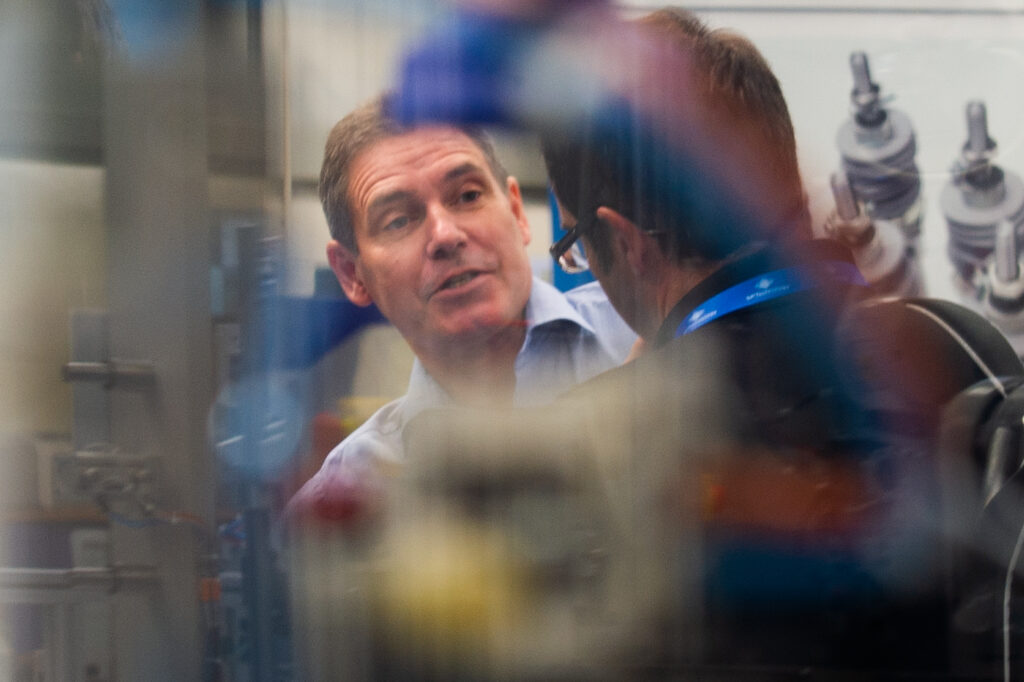
At SP Automation & Robotics, we work closely with production managers, manufacturing engineers, quality teams and project stakeholders throughout every stage of a project. Sharing knowledge early helps ensure the automation system is designed around the realities of the manufacturing environment rather than assumptions made during the design process.
Open communication also allows potential issues to be identified before they become costly design changes later in the project.
We’ve found that the best results come from treating automation as a partnership, where both parties contribute their expertise to achieve the best possible outcome.
Common Mistakes That Can Delay an Automation Project
Over the years, our engineers have seen a number of common issues that can affect automation projects. Most are avoidable with careful planning and clear communication from the outset.
Some of the most common include:
- Unclear project objectives.
- Underestimating future production requirements.
- Making product design changes late in the project.
- Incomplete production data.
- Unrealistic project timescales.
- Delaying discussions about automation until product design is complete.
None of these challenges necessarily prevent a successful project, but addressing them early usually results in a smoother design process, reduced engineering risk and a more efficient implementation.
Planning for Installation and Commissioning
Planning doesn’t stop once the machine has been designed.
Installation and commissioning are critical stages of any automation project, and considering them early can significantly reduce disruption to production.
Questions such as how equipment will be delivered, where it will be installed, how it will integrate with existing machinery and whether operator training is required are all important considerations before the system arrives on site.
At SP Automation & Robotics, we plan these stages alongside the engineering design to help ensure installation progresses as efficiently as possible. Combined with comprehensive Factory Acceptance Testing before delivery, this structured approach helps minimise downtime and provides greater confidence throughout commissioning.

Automation Is an Investment in the Future
A well-designed automation system should continue delivering value for many years after installation.
That’s why every engineering decision made during the planning stage should consider not only current production requirements but also future flexibility, maintainability and scalability.
Whether production volumes increase, new product variants are introduced or additional manufacturing processes are automated, a system that’s been carefully planned from the outset is far better positioned to adapt to changing business needs.
At SP Automation & Robotics, we don’t just design machines; we help manufacturers develop automation solutions that support their long-term manufacturing strategy.
Why Manufacturers Choose SP Automation & Robotics
For more than 40 years, SP Automation & Robotics has been helping manufacturers improve productivity through bespoke automation systems, robotic automation solutions and special purpose machinery.
Our approach is built on understanding each customer’s manufacturing process before proposing a solution. By combining practical engineering experience with collaborative project planning, we develop automation systems that improve efficiency, enhance quality and provide measurable long-term value.
From feasibility studies and concept development through to machine design, Factory Acceptance Testing, installation and ongoing technical support, our experienced team works alongside customers at every stage of the automation journey.
Conclusion
Every successful automation project begins with asking the right questions.
Understanding your manufacturing process, defining clear objectives and involving automation specialists early can make a significant difference to the outcome of a project. It helps reduce risk, simplifies engineering decisions and creates automation systems that are designed around the needs of the business rather than the limitations of standard machinery.
At SP Automation & Robotics, we’ve seen first-hand how careful planning lays the foundation for successful automation. By working collaboratively with our customers from the earliest stages of a project, we’re able to develop bespoke automation solutions that deliver lasting improvements in productivity, quality and manufacturing performance.
If you’re considering investing in automation, our engineering team is here to help. Whether you’re exploring the feasibility of a new project or looking to improve an existing production process, SP Automation & Robotics can provide the expertise and guidance needed to turn your manufacturing goals into a practical, reliable automation solution.
Follow us on LinkedIn, Twitter & Facebook to stay updated.
Read more about our automation here…
- Benefits of Automation
- The Benefits of Machine Vision Technology
- How Much Does it Cost to Design a Special Purpose Machine
- Designing Automation Systems for Pharma
- Robots & Cobots – What is the Difference?
- Robotic Automation
- What is a URS? Why is it Important?
- Cost of Industrial Automation
Contact Us
Frequently Asked Questions
How long does it take to design a special purpose machine?
What is included in the design phase of a bespoke automation machine?
Why does designing a special purpose machine take time?
Can the design phase be shortened?
What factors influence design time?
More information
Here you can find the most important news, blogs and videos from SP Automation & Robotics.. We will highlight developments, insightful industry trends, company announcements, technology expos, conferences, and events.