


How Long Does It Take to Design a Special Purpose Machine in the UK?
Topics:
July 2026
For manufacturers investing in bespoke automation, one of the most important early questions is: how long does it take to design a special-purpose machine in the UK?
At SP Automation & Robotics, this is a question that arises at the very beginning of most projects. While build and installation timelines often receive the most attention, it is the design phase that ultimately determines how successful the machine will be.
Drawing on decades of experience delivering bespoke automation systems across UK industry, SP Automation & Robotics typically sees design timelines ranging from 4 to 16+ weeks, depending on the complexity, level of customisation and integration requirements of the application.
However, to understand why this timeframe varies and why it matters it is important to look more closely at what the design phase actually involves.
What Is the Design Process for a Special Purpose Machine?
At SP Automation & Robotics, the design of a special purpose machine is not treated as a simple preliminary step. Instead, it is a structured and highly collaborative engineering process that defines how the system will function in a real production environment.
Unlike standard equipment, every machine developed by SP Automation & Robotics is tailored to a specific product, process, and manufacturing challenge. This means the design phase must account for production rates, product variation, operator interaction, safety requirements, and long-term reliability.
The goal is not simply to create a machine that works, but to engineer a system that performs consistently and efficiently over its operational life.
Design Time vs. Project Duration
Within every special-purpose machine project, time is allocated for each stage of development. This includes mechanical design, electrical design, software development, manufacturing, machine build, debugging, trials, and finally installation and commissioning.
At the start of the project, the primary focus is on mechanical design. However, this involves far more than simply creating component drawings. During this phase, the project is established, the documentation is completed, the functional specification is finalised, and the overall engineering approach is defined.
Design activities then continue throughout the project, overlapping with electrical controls, software development, manufacturing, and even the machine build. This concurrent approach enables multiple disciplines to progress together, helping to reduce lead times and keep the project on schedule.
The importance of being organised at the beginning of a project cannot be overstated. Clear specifications and well-defined documentation allow the controls and software teams to begin development in parallel with the mechanical design. This coordinated approach is essential to meeting project milestones and ensuring the machine is delivered on time.
Proof of Concept (POC) Stage
Many of the special-purpose machines designed by SP involve complex manufacturing processes or incorporate new technologies. While a comprehensive risk assessment is carried out during the proposal stage, some projects require a Proof of Concept (POC) phase at the start of the project.
The purpose of the POC stage is to validate critical aspects of the design before full-scale engineering begins. It allows key processes, mechanisms, or technologies to be tested and refined, reducing technical risk and providing confidence that the proposed solution will perform as intended.
By identifying and resolving potential issues early, the Proof of Concept stage helps minimise costly design changes later in the project, leading to a smoother development process and a more reliable final machine.
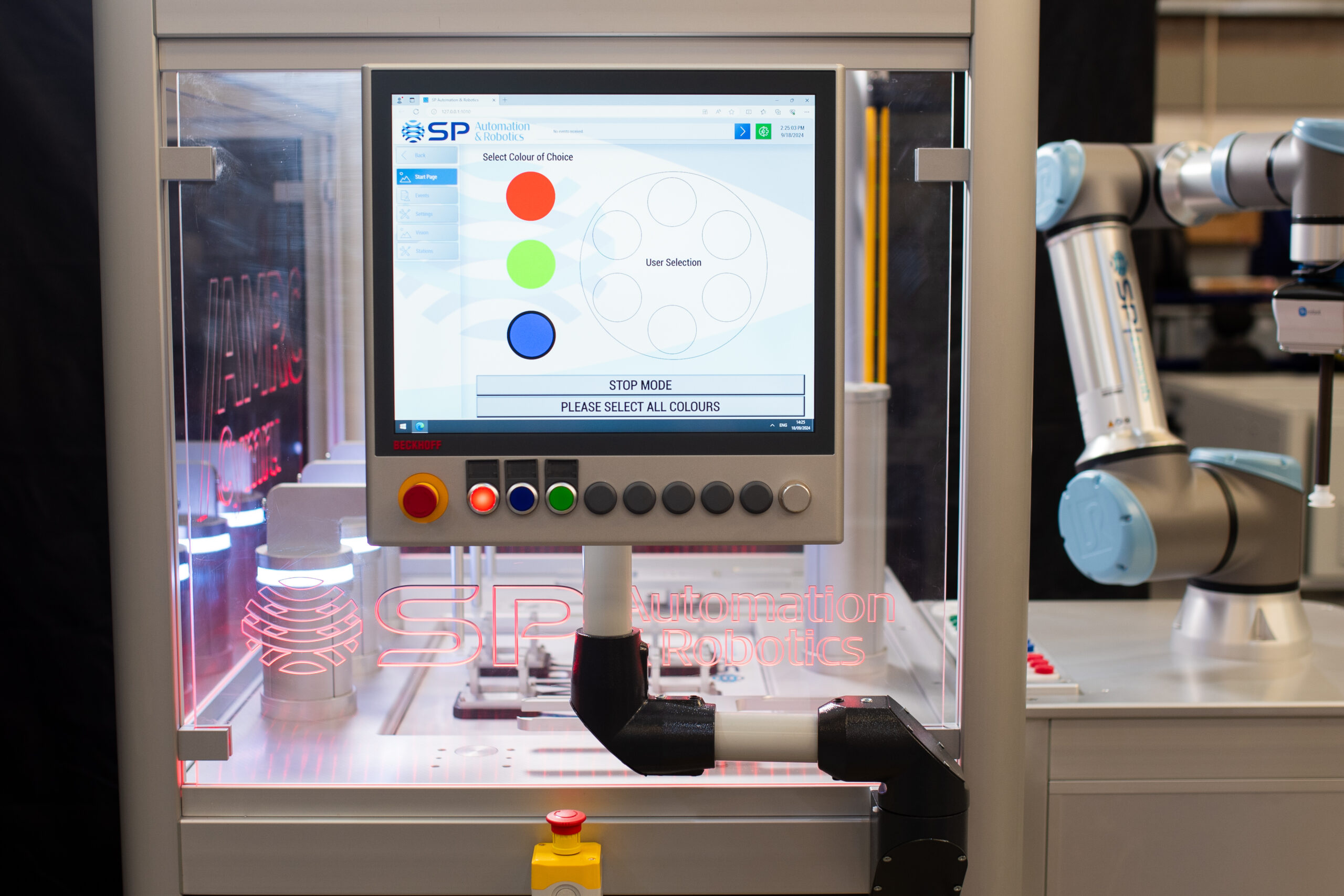
How Long Does It Take to Design a Bespoke Automation Machine?
In most cases, SP Automation & Robotics designs special purpose machines within a timeframe of 4 to 16+ weeks.
Simpler automation systems such as single-process or standalone machines can often be designed within four to six weeks. Medium complexity systems, which may involve multiple operations or more advanced handling, typically require six to ten weeks. Highly complex machines, particularly those involving multiple stages, integration with existing production lines, or advanced inspection and testing, can take ten to sixteen weeks or longer.
These timeframes reflect the level of engineering required to ensure that the final system meets performance expectations and operates reliably in a demanding manufacturing environment.
What Happens During the Design Phase of a Custom Machine?
The design phase at SP Automation & Robotics progresses through several key stages, each contributing to the overall timeline and success of the project.
The process begins with concept development, where the most appropriate automation approach is defined. At this stage, the engineering team works closely with the client to understand the application in detail, including production targets, constraints, and desired outcomes. This stage typically takes one to three weeks and lays the foundation for all subsequent design work.
Following this, the project moves into detailed mechanical design. Using advanced 3D CAD modelling, engineers at SP Automation & Robotics develop every aspect of the machine, from structural components to bespoke mechanisms and tooling. This stage requires careful consideration of movement, tolerances, and durability, and may involve multiple iterations to optimise performance.
Running in parallel with mechanical development is controls and electrical design. This defines how the machine will operate, including sequencing, motion control, and safety systems. At SP Automation & Robotics, this stage ensures that all elements of the system work together seamlessly, particularly in complex automation environments.
Finally, the design undergoes a comprehensive review and validation process. This ensures that the system meets all functional and safety requirements before moving into manufacture. It also provides an opportunity for client approval, reducing the risk of changes later in the project.
What Factors Affect Special Purpose Machine Design Time?
From the perspective of SP Automation & Robotics, several key factors influence how long it takes to design a special purpose machine.
The most significant of these is system complexity. A straightforward automation cell can be designed relatively quickly, whereas a machine that performs multiple operations such as assembly, inspection and testing requires far more detailed engineering.
The level of customisation also plays a major role. As a specialist in bespoke automation, SP Automation & Robotics often develops systems from first principles, which naturally increases design time compared to adapting standard machinery.
Integration requirements can further extend timelines. Where machines must interface with existing production lines, data systems, or third-party equipment, additional coordination is required to ensure compatibility.
Industry-specific requirements must also be considered. In regulated sectors such as medical devices or pharmaceuticals, additional validation and documentation may be required, increasing the scope of the design phase.
Finally, the speed of client feedback and decision-making can influence overall timelines. Because bespoke automation projects are inherently collaborative, clear and timely communication is essential to maintaining progress.
Why Does Designing a Special Purpose Machine Take So Long?
It is sometimes assumed that design timelines can be shortened to accelerate project delivery. However, experience at SP Automation & Robotics has consistently shown that a well-structured design phase is essential to project success.
Designing a special purpose machine requires detailed engineering to ensure that all elements of the system function together reliably. Attempting to reduce this time often leads to issues during manufacture, including design changes, increased costs and delays in commissioning.
By investing the appropriate time in design, SP Automation & Robotics ensures that machines are fully engineered before build begins. This results in a more efficient manufacturing process, smoother installation and improved long-term performance.
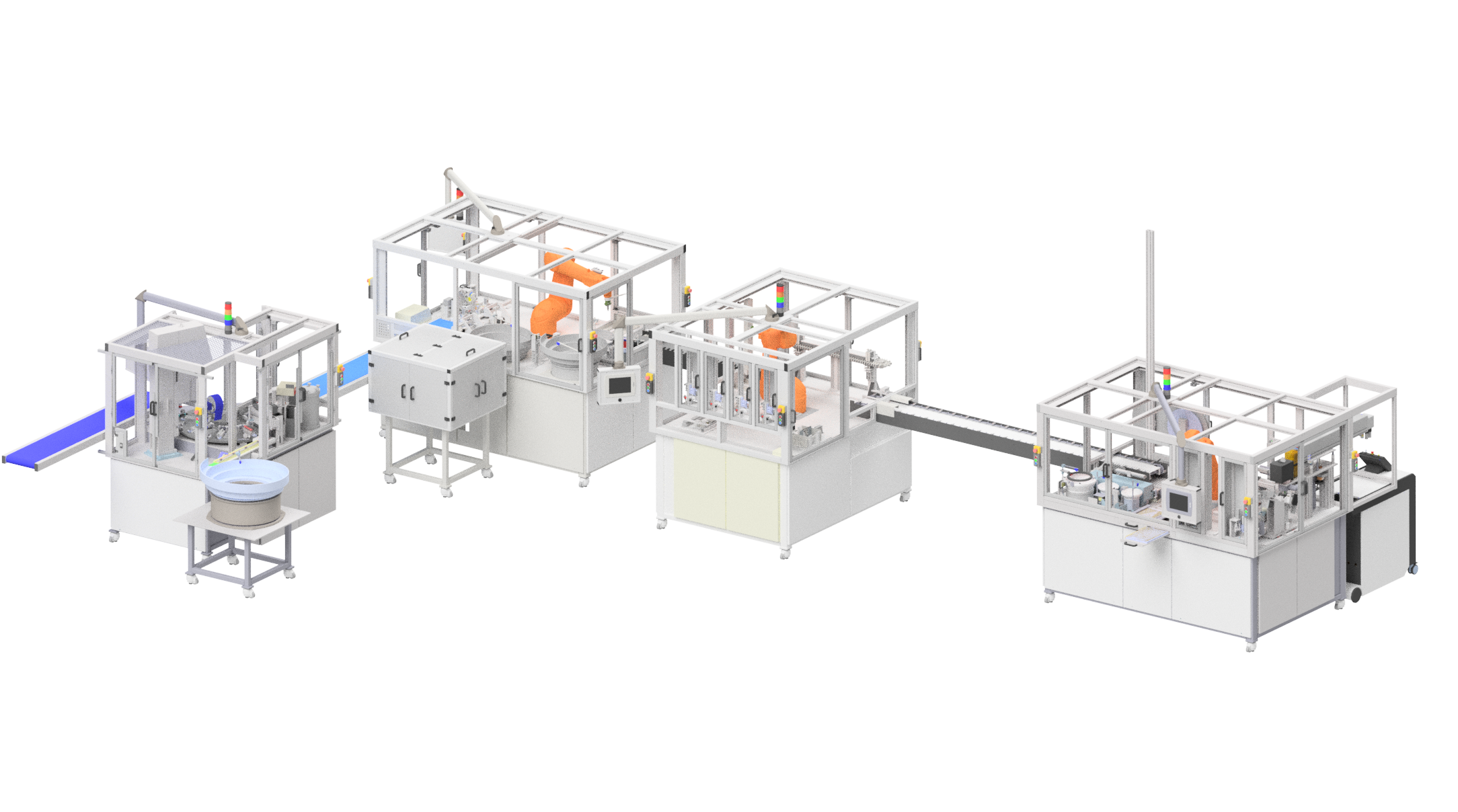
Design vs Build: What’s the Difference in Automation Projects?
Although design and build are closely linked, they represent two distinct phases of an automation project.
At SP Automation & Robotics, the design phase defines how the machine will function, while the build phase focuses on manufacturing and assembly. The quality of the design has a direct impact on how efficiently the build process progresses.
A well-executed design reduces uncertainty, minimises rework, and ensures that the final system performs as intended. For a detailed breakdown of build timelines, see our related guide on how long it takes to build a custom automation system.
Typical Design Timeframes for Special Purpose Machines in the UK
Based on extensive project experience, SP Automation & Robotics typically delivers design within the following ranges.
Simpler automation systems are often completed within four to six weeks, while medium complexity machines generally require six to ten weeks. Highly complex, fully bespoke systems particularly those involving multiple processes or advanced integration may take ten to sixteen weeks or more.
These timelines reflect the level of engineering required to deliver a reliable, high-performance automation solution tailored to a specific manufacturing application.
The Value of Experience in Machine Design
Experience plays a critical role in determining how efficiently a machine can be designed. At SP Automation & Robotics, decades of expertise in bespoke automation enable potential challenges to be identified early in the process.
This reduces the need for redesign, minimises risk, and ensures that projects progress efficiently without compromising quality. It also allows for more informed decision-making during concept development, which has a significant impact on the overall success of the system.
Final Thoughts
Designing a special purpose machine is a detailed and highly technical process that typically takes between four and sixteen weeks, depending on the complexity of the application.
At SP Automation & Robotics, this phase is recognised as the foundation of every successful automation project. By investing the necessary time and expertise in design, the resulting systems are engineered to deliver reliable performance, seamless integration and long-term value.
Follow us on LinkedIn, Twitter & Facebook to stay updated.
Read more about our automation here…
- Benefits of Automation
- The Benefits of Machine Vision Technology
- How Much Does it Cost to Design a Special Purpose Machine
- Designing Automation Systems for Pharma
- Robots & Cobots – What is the Difference?
- Robotic Automation
- What is a URS? Why is it Important?
- Cost of Industrial Automation
Contact Us
Frequently Asked Questions
How long does it take to design a special purpose machine?
What is included in the design phase of a bespoke automation machine?
Why does designing a special purpose machine take time?
Can the design phase be shortened?
What factors influence design time?
More information
Here you can find the most important news, blogs and videos from SP Automation & Robotics.. We will highlight developments, insightful industry trends, company announcements, technology expos, conferences, and events.