

Installation and Commissioning: Deploying Bespoke Automation into Live Manufacturing Environments
Topics:
March 2026
Design and build quality establish the foundation of a bespoke automation system. Installation and commissioning determine how effectively that system transitions into productive operation.
For manufacturers operating live production facilities, installation is not simply a delivery event. It is a controlled integration process that must protect output, maintain safety compliance and preserve operational continuity.
Installing automation into an operational factory environment introduces additional complexity beyond building a standalone machine. Systems must integrate safely with existing equipment, operators and production processes while maintaining compliance with UK safety regulations.
When executed properly, commissioning confirms that engineering intent translates into measurable production performance within the client’s real-world environment.
Preparation Before Physical Installation
Successful installation begins long before equipment arrives on site.
Floor loading capacity, services provision, compressed air supply, electrical infrastructure and network integration must be evaluated in advance. Layout planning ensures adequate maintenance access, material flow continuity and operator visibility.
In complex environments, coordination with production management is essential to minimise disruption. Installation windows must be strategically planned around shutdown periods or staged integration schedules.
A structured pre-installation review prevents delays, reduces downtime exposure and protects project timelines.
Controlled Mechanical and Electrical Integration
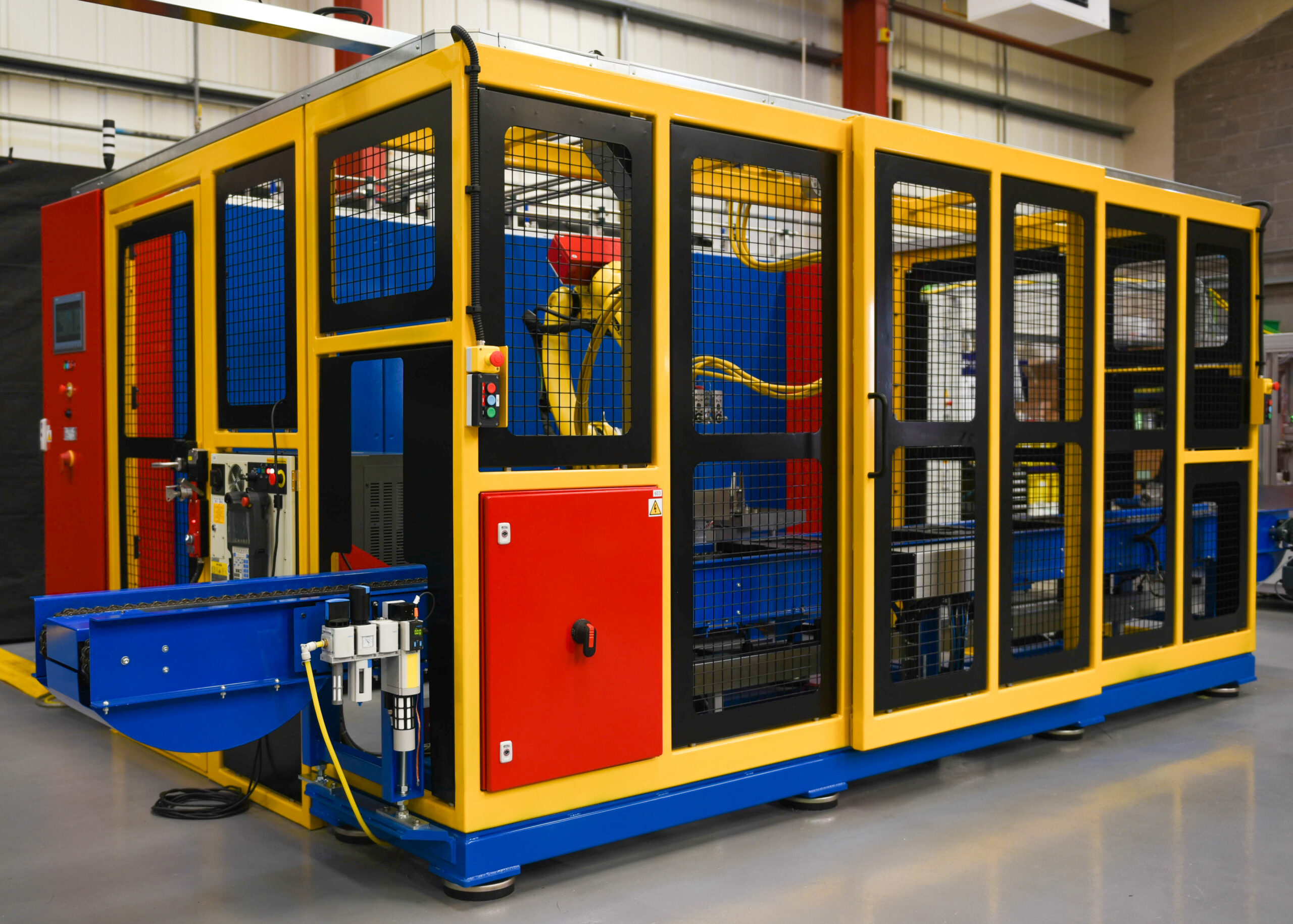
During installation, mechanical positioning and alignment must be executed with precision. Robot bases, guarding structures and material handling systems require accurate placement to preserve repeatability and safety integrity.
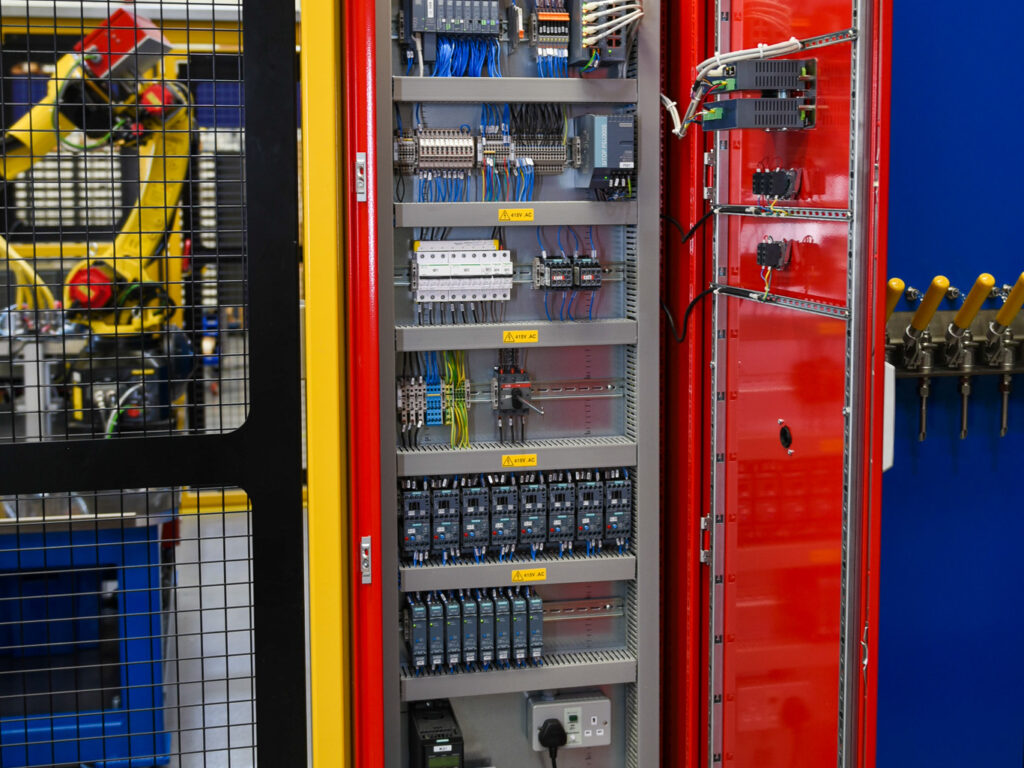
Electrical integration demands equal discipline. Power connections, safety circuits, communication networks and machine interfaces must be validated systematically. This is not an environment for improvisation.
Each interface between the new automation system and existing equipment represents a potential failure point if not engineered carefully. Commissioning teams must approach integration methodically, verifying signal exchange, timing sequences and fault responses before the system enters live production.
On-Site Commissioning and Performance Validation
Commissioning moves the system from static installation to dynamic operation.
This phase includes motion verification, safety validation, dry-cycle testing and the progressive introduction of live components. Performance targets established during feasibility and design are now tested under genuine production conditions.
Cycle times, repeatability and recovery procedures are observed and adjusted as necessary. Commissioning is also where operator interaction is evaluated to ensure practical usability.
In high-value automation projects, commissioning is not rushed. It is the final engineering validation stage before handover.
Minimising Disruption to Production
One of the defining characteristics of a professional automation integrator is the ability to introduce new systems without compromising ongoing production output.
Staged commissioning, parallel validation and structured sign-off procedures allow production to resume with confidence. Where possible, new systems are tested independently before full integration into the manufacturing flow.
The objective is a controlled transition rather than an experimental implementation.
Manufacturers investing in bespoke automation expect minimal disruption and a predictable ramp-up. This expectation should be met through planning and engineering discipline rather than reactive problem-solving.
Compliance Confirmation and Documentation
Installation and commissioning also complete the compliance documentation required for safe operation.
When we install automation in a working manufacturing environment, we must ensure the system complies with several UK machinery and workplace safety regulations. These rules apply to bespoke machines, robotic cells and fully integrated production lines. Teams therefore consider compliance throughout the design, installation and commissioning stages of a project.
One of the most important regulations is the Provision and Use of Work Equipment Regulations (PUWER) 1998. PUWER applies to all machinery used in workplaces and requires equipment to be safe for its intended purpose. Engineers must identify potential risks, assess them carefully and implement appropriate control measures.
Operators must also receive appropriate training to use the equipment safely. Machines must include appropriate guarding and safety systems to protect personnel during operation. In addition, maintenance teams must inspect and maintain equipment regularly to ensure it remains safe and reliable. When manufacturers introduce new automation into an existing production line, engineers may need to reassess the entire system to confirm it still complies with PUWER.
Supply of Machinery (Safety) Regulations 2008
Another key framework is the Supply of Machinery (Safety) Regulations 2008, which governs the design and supply of machinery in the UK. For bespoke automation systems, this regulation requires engineers to conduct formal risk assessments and demonstrate that the system meets the Essential Health and Safety Requirements set out in the legislation.
Engineering teams must also prepare technical documentation that demonstrates compliance. This documentation typically includes a Technical Construction File and a Declaration of Conformity. Once complete, the system must carry the appropriate CE or UKCA marking.
When multiple machines are part of a single automated production line, the system integrator may be responsible for the system’s conformity. As a result, compliance management becomes a critical part of the installation and commissioning process.
Alongside these regulations, we follow several international safety standards when designing and validating industrial automation systems. These standards address areas such as safety control systems, electrical safety, machine guarding, interlocking devices, safety distances and the positioning of safety devices.
Clear and structured documentation supports ongoing compliance. It also helps maintenance teams work more efficiently, simplifies future system modifications and ensures the automation system can be serviced, upgraded or expanded throughout its operational life.
From Installation to Operational Asset
Once installation and commissioning are complete, the automation system begins its transition into everyday production.
SP Automation & Robotics manages installation and commissioning with discipline, ensuring the system moves smoothly from project delivery to a productive operational asset.
Operators quickly gain confidence in how the system behaves under normal production conditions. Management can review performance data and confirm that the automation delivers the expected results. Maintenance teams receive the documentation and technical guidance they need to support the system throughout its operational life.
The difference between a difficult automation project and a successful one often comes down to how carefully engineers manage commissioning. Most automation projects follow a structured engineering process to reduce risk and ensure reliable performance once the system enters production.
We usually begin with a feasibility study to confirm that the proposed automation solution is technically and operationally viable. They then carry out a detailed risk assessment and develop a safety concept that defines how the system will control hazards.
Factory Acceptance Testing (FAT)
After establishing the safety architecture, the project moves into detailed engineering and system build. Before delivery, the team performs Factory Acceptance Testing (FAT), in which they verify the system’s functionality, safety features, and performance targets in a controlled environment.
The installation phase prepares the system for integration into the customer’s facility. During on-site commissioning, engineers install the equipment, connect services and gradually introduce the system into the production process.
At this stage, the team completes safety validation and trains operators to interact with the system confidently and safely. The project concludes with production handover, when the automation system becomes a fully operational manufacturing asset.
SP Automation deploys bespoke automation systems using structured installation planning, disciplined integration methods and measured performance validation. This approach ensures every system enters live production as a stable, compliant and reliable part of the customer’s manufacturing environment.
Follow us on LinkedIn, Twitter & Facebook to stay updated.
Read more about our automation here…
- Benefits of Automation
- Automation Feasibility Studies
- Automation System Design and Risk Assessment
- Build and Integration of Bespoke Automation Systems
- Installation and Commissioning of Industrial Automation Systems
- Operator Training, Handover and Long-Term Automation Support
- Automated Medical Device & Assembly Systems
- Medical Device Material
- Part Handling and Part Feeding Vibratory Bowl
- Cost of Industrial Automation
Contact Us
More information
Here you can find the most important news, blogs and videos from SP Automation & Robotics.. We will highlight developments, insightful industry trends, company announcements, technology expos, conferences, and events.